
How to Design a Trip Around Rest — NotJust Activities
Here's a question most travelers have asked at least once, usually on a Sunday evening after unpacking:
Why do I feel like I need a vacation from my vacation?
The trip was good. The destination was right. The photos came out beautifully. But somewhere between the packed itinerary, the early alarms, the reservation logistics, and the constant movement from place to place, the rest never actually happened.
You came home with memories. But you didn't come home restored.
This is not a failure of the destination. It's a failure of design. The trip was built around activities — and rest was left to fill whatever space remained.
For most trips, that space is almost none.
Why We Over-Plan — And What It Costs Us
Over-planning is one of the most common and least examined habits in modern travel.
It comes from good intentions. You're spending money. You're taking time away from work. You want to make the most of it. And "making the most of it" almost always translates to doing the most.
There's also the influence of unfamiliarity. When you don't know a destination, the instinct is to research, list, and schedule — because structure feels safer than uncertainty. The itinerary becomes a security blanket.
And then there's the invisible pressure of social travel. Photos to take. Restaurants to try. Landmarks to visit. The unspoken expectation — from friends, from social media, sometimes from yourself — that a trip should be full. That busyness is proof the trip was worth it.
But busyness and restoration are not the same thing. They rarely even coexist.
An over-planned trip fills the hours. A well-designed trip fills the person.
That distinction matters more than most travelers realize — until they've experienced both.
The Emerging Movement: Quietcations, Hushpitality, and the Luxury of Silence
Something is shifting in the travel industry, and it has a few names.
Quietcations — trips designed specifically around silence, stillness, and disconnection. Hushpitality — a hospitality philosophy that prioritizes calm over
stimulation, privacy over spectacle. Wellness travel — once a niche, now one of the fastest-growing categories in luxury bookings.
These aren't trends born from aesthetics. They're born from exhaustion.
The modern professional lives in a state of constant input. Notifications. Meetings.
News. Decisions. The nervous system is rarely allowed to fully downshift — and conventional vacations often replicate the same pace in a different setting.
The quietcation movement is a response to that reality. It says: rest is not lazy.
Silence is not boring. Doing nothing — intentionally, in a space designed for it — is one of the most productive things a person can do.
And the travelers leading this movement aren't opting out of luxury. They're redefining it. Luxury isn't a full calendar. It's an empty one — in a space beautiful enough to make you grateful for the emptiness.
What a Rest-First Trip Actually Looks Like
A rest-first trip has no rigid itinerary. That's not an oversight. It's the design.
Mornings unfold naturally. There's no alarm. Coffee is made slowly, in a kitchen that feels like yours. The first hour of the day isn't spent preparing to go somewhere — it's spent being where you are.
Afternoons have nothing planned. Not because you couldn't plan something, but because the absence of plans is the point. You might read. You might walk. You might sit outside and watch the light change. You might nap without setting a timer.
Evenings are unhurried. Dinner is cooked at home or eaten somewhere nearby — not the restaurant with the two-hour wait you booked three weeks ago, but the quiet place you noticed on your walk. The kind of meal where the conversation is better than the food, and the food is still good.
The rhythm of a rest-first trip is slower than real life but faster than boredom. It finds its own pace — usually within the first day. And once it does, time stretches. A three-night stay feels like a week. A week feels like something you'll carry for months.
How the Home Enables Rest
Rest doesn't happen in a vacuum. It happens in a space.
And the space either supports it or works against it — often in ways the guest never consciously identifies.
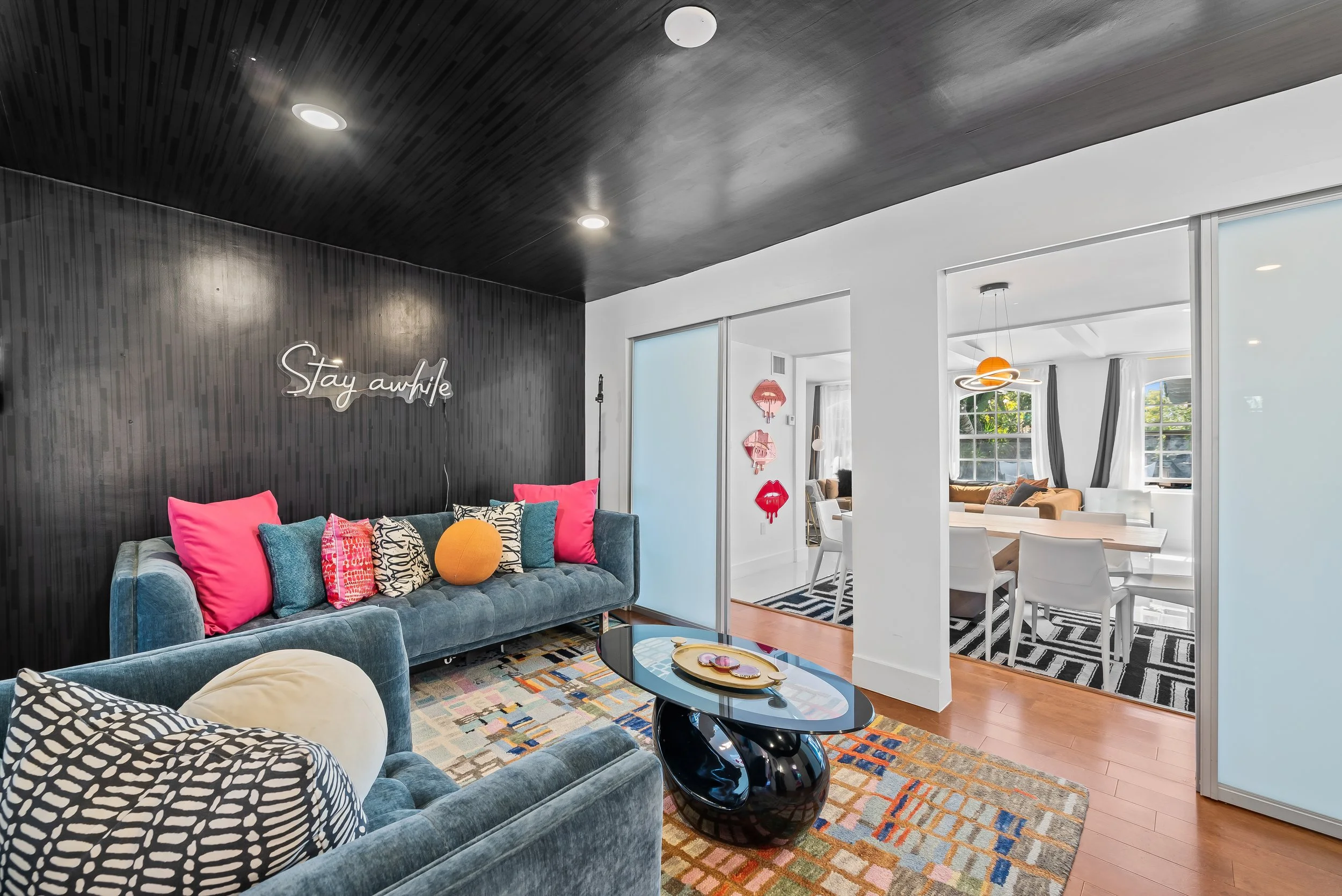
Natural light is the most powerful calming agent in residential design. A home that fills with daylight — gradually, warmly, in a way that tracks the movement of the sun — helps regulate the body's circadian rhythm without effort. You sleep better.
You wake more naturally. Your energy follows the day instead of fighting it.
Open space reduces mental clutter. A floor plan that breathes — where rooms connect without crowding, where sight lines extend to the outdoors, where the eye has somewhere to rest — creates a feeling of freedom that mirrors internal spaciousness.
Grounding materials support nervous system regulation. Wood, stone, linen, natural fibers — textures that are warm, tactile, and real. These materials don't stimulate. They settle. And in a space built around them, the body follows.
Outdoor access is essential. A patio. A garden. A pool. A terrace that connects the interior to the landscape. Rest deepens when it includes fresh air, shifting light, and the quiet awareness of a world that continues without requiring your participation.
When all of these elements are present — light, space, materials, the outdoors — the home doesn't just contain rest. It generates it.
Why Sedona and Florida Serve Rest Differently — And Both Work
Not all rest feels the same. And the right environment depends on what kind of rest you're seeking.
Sedona offers the kind of rest that comes from subtraction. The desert strips things away — noise, stimulation, visual complexity. What's left is space. Red rock, open sky, dry warmth, silence. The landscape itself is therapeutic. You don't have to do anything to benefit from it. You just have to be in it.
For guests recovering from burnout, creative depletion, or decision fatigue, Sedona's stillness works like medicine. The home becomes a retreat. The environment does the healing.
Florida's Gulf Coast offers a different register. The rest here comes from rhythm — the sound of water, the warmth of the sun, the slow pulse of coastal living. It's not silent. It's gentle. The nervous system softens not because stimulation disappears, but because it becomes natural, repetitive, and soothing.
For guests who need recovery with a lighter touch — couples, families, professionals who want rest without total withdrawal — the coast provides the balance. Ease without emptiness. Calm with warmth.
Both environments work. They just serve different needs. And knowing which one matches your current state is the first step in designing a trip around rest.
How to Plan a Restorative Trip Without Guilt
The hardest part of a rest-first trip isn't the logistics. It's the psychology.
Most people feel guilty doing nothing — especially when they've paid for a trip. The internal voice says: you should be seeing things. You should be active. You're wasting the opportunity.
Here's how to quiet that voice:
Give yourself permission in advance. Decide before you leave that rest is the purpose. Not the fallback, not the reward for a busy day — the reason for the trip.
When rest is the plan, doing nothing isn't a failure. It's the itinerary.
Choose a home, not a hotel. Hotels create the expectation of activity — restaurants, room service, the pool scene, the lobby bar. A private home creates the expectation of living. The space supports stillness because it was designed for it.
Leave the itinerary open. Not empty — open. A few ideas, loosely held. A restaurant you might try. A walk you might take. A sunset you might catch.
Nothing booked.
Nothing rigid. Just possibilities that you can reach for or let pass without consequence.
Tell the people you're with. If you're traveling with a partner or a group, align on the intention. When everyone agrees that rest is the goal, no one has to justify choosing the couch over the excursion.
And trust the process. The first day might feel strange. By the second, you'll have found a rhythm. By the third, you won't want to leave.
When the Space Becomes the Experience
At Paragon Luxury Stays, every home is designed with the understanding that some guests aren't coming for the destination. They're coming for the stay.
The home isn't a base camp for activities. It's the experience itself — the place where the trip lives, where the rest happens, where the memories are formed.
Spaces filled with natural light. Layouts that invite slow mornings and long evenings. Materials that ground. Outdoor areas that extend the feeling of calm beyond the walls. Design that doesn't demand attention — it gives it back.
No packed schedule required. No excursions to justify the trip. Just a space that does what the best spaces do: make you feel like being exactly where you are is enough.
Because the most restorative trips aren't built around what you do.
They're built around how the space makes you feel when you stop.
Explore Paragon Luxury Stays — and discover homes where rest isn't an afterthought. It's the design.
